
As Case Study: How Retail Agencies Boost In-Store Sales takes center stage, this opening passage beckons readers with casual formal language style into a world crafted with good knowledge, ensuring a reading experience that is both absorbing and distinctly original.
In today's competitive retail landscape, understanding how retail agencies drive in-store sales is crucial for businesses looking to thrive. This case study delves into the strategies and techniques that these agencies use to boost sales and create engaging shopping experiences for customers.
Overview of Retail Agencies Boosting In-Store Sales
Retail agencies play a crucial role in helping retail businesses enhance their in-store sales by implementing effective strategies and initiatives to attract and engage customers. These agencies work closely with brands to create impactful marketing campaigns, optimize product placement, and improve the overall shopping experience for consumers.
Successful Strategies Implemented by Retail Agencies
- Implementing targeted promotions and discounts to drive foot traffic and encourage purchases.
- Utilizing data analytics to understand consumer behavior and preferences, leading to personalized marketing strategies.
- Optimizing store layouts and displays to maximize visibility and highlight key products for increased sales.
Importance of In-Store Sales for Retail Businesses
In-store sales are vital for retail businesses as they provide a tangible connection between the brand and the consumer. It allows for face-to-face interactions, product demonstrations, and the opportunity to create a memorable shopping experience that can lead to repeat business and customer loyalty.
Additionally, in-store sales contribute to overall revenue and profitability, making it essential for retail businesses to focus on enhancing their in-store sales performance.
Understanding Consumer Behavior in Retail Settings

Consumer behavior in retail settings is a crucial aspect that retail agencies analyze to enhance their sales strategies and maximize in-store promotions. By understanding how consumers interact with products, displays, and the overall environment, retail agencies can tailor their approaches to meet the needs and preferences of their target audience.
Analyzing Consumer Behavior in-Store
- Retail agencies utilize various methods to analyze consumer behavior in-store, such as tracking foot traffic patterns, observing shopping behaviors, and conducting surveys or focus groups.
- They may use technologies like heat mapping and video monitoring to monitor how customers move through the store, which areas they visit most frequently, and how much time they spend at different product displays.
- By collecting and analyzing data on consumer behavior, retail agencies can gain valuable insights into shopper preferences, buying habits, and decision-making processes.
Influence of Consumer Behavior Data on Sales Strategies
- Consumer behavior data plays a significant role in shaping sales strategies, as it helps retail agencies identify trends, predict customer needs, and optimize product placement and pricing.
- By understanding which products are most popular among certain demographics or at specific times of the year, retail agencies can adjust their inventory, marketing campaigns, and promotional offers to drive sales.
- Through targeted marketing efforts and personalized customer experiences based on consumer behavior data, retail agencies can build stronger connections with shoppers and increase loyalty.
Impact of Consumer Behavior on In-Store Promotions and Sales
- Consumer behavior directly influences the effectiveness of in-store promotions, as retail agencies can tailor their promotional strategies to align with consumer preferences and purchasing behaviors.
- By analyzing consumer behavior data, retail agencies can determine the best times to launch promotions, the most enticing offers to provide, and the optimal placement of promotional displays within the store.
- Understanding consumer behavior allows retail agencies to create a more engaging and personalized shopping experience for customers, ultimately leading to increased sales and customer satisfaction.
Implementing Effective Visual Merchandising Techniques
Visual merchandising is a crucial aspect of retail marketing that involves creating visually appealing displays to attract customers and drive sales. By strategically arranging products, using color schemes, and incorporating signage, retail agencies can effectively influence consumer behavior in-store.
Key Visual Merchandising Methods
- Window Displays: Eye-catching window displays are often the first point of contact for customers and can entice them to enter the store.
- Planogram Implementation: Organizing products on shelves according to a planogram can help optimize space and improve product visibility.
- Color Psychology: Using colors strategically can evoke different emotions and influence purchasing decisions.
- Signage and Graphics: Clear and attractive signage can guide customers through the store and highlight promotions or new arrivals.
Examples of Successful Visual Merchandising Campaigns
- Apple: Known for its minimalist and sleek displays, Apple stores create a premium and aspirational shopping experience.
- Zara: Zara regularly updates its store layouts and product displays to create a sense of urgency and encourage impulse purchases.
- IKEA: IKEA utilizes room setups to showcase its furniture and home decor products in a real-life setting, allowing customers to visualize the products in their own homes.
How Visual Merchandising Can Drive In-Store Sales
Visual merchandising plays a crucial role in capturing the attention of shoppers, creating a positive shopping experience, and ultimately increasing sales. By strategically designing store layouts, product displays, and signage, retail agencies can influence consumer behavior, encourage impulse purchases, and build brand loyalty.
Leveraging Technology to Enhance In-Store Experiences
In today's digital age, retail agencies are constantly looking for ways to enhance the in-store shopping experience using innovative technologies. By leveraging tools such as AI, AR, and VR, these agencies can create unique and engaging experiences for customers, ultimately boosting in-store sales.
Role of AI, AR, and VR in Boosting In-Store Sales
- AI: Artificial Intelligence is being used to personalize the shopping experience by analyzing customer data and preferences. This allows retailers to offer tailored product recommendations, promotions, and discounts to customers, increasing the likelihood of a purchase.
- AR: Augmented Reality is revolutionizing the way customers interact with products in-store. By using AR applications, customers can visualize how products will look in their own space before making a purchase. This interactive experience enhances customer engagement and can lead to higher conversion rates.
- VR: Virtual Reality is being utilized by some retail agencies to create immersive shopping experiences. Customers can virtually explore products and even try them on without physically being in the store. This technology not only enhances the overall shopping experience but also helps in driving sales.
Examples of Technological Solutions by Retail Agencies
- Smart Mirrors: Some retail agencies have implemented smart mirrors equipped with AR technology that allow customers to virtually try on different outfits and accessories. This not only saves time but also provides a fun and interactive shopping experience.
- Mobile Apps: Retail agencies are developing mobile applications with AI capabilities to offer personalized recommendations, real-time promotions, and easy checkout options. These apps enhance the convenience and overall shopping experience for customers.
- Interactive Displays: Using interactive displays powered by AI and AR, retail agencies can showcase products in a more engaging and informative way. Customers can interact with the displays to learn more about the products, leading to increased interest and potential sales.
Developing Strategic Partnerships for In-Store Promotions
In the competitive retail landscape, forming strategic partnerships can be a powerful way to boost in-store sales. By collaborating with other brands or businesses, retailers can tap into new customer bases, offer unique promotions, and create a buzz around their products.
Let's delve into the process of forming these partnerships, the benefits they bring, and some successful case studies.
Process of Forming Partnerships
- Identify potential partners: Retailers should look for brands or businesses that complement their offerings and share a similar target audience.
- Reach out and establish connections: Once potential partners are identified, retailers can reach out to them to discuss collaboration opportunities.
- Define goals and expectations: It's crucial to align on goals, expectations, and responsibilities to ensure a successful partnership.
- Execute partnership agreement: Formalize the partnership through a written agreement outlining the terms and conditions of the collaboration.
Benefits of Collaborating with Other Brands or Businesses
- Expand reach: Partnering with another brand can help retailers reach a new customer segment that they may not have access to otherwise.
- Enhance credibility: Associating with a reputable brand can enhance the retailer's credibility and trustworthiness in the eyes of consumers.
- Cost-effective marketing: Sharing marketing and promotional costs with a partner can make campaigns more cost-effective and impactful.
- Drive foot traffic: Joint promotions and events can attract more foot traffic to the store, leading to increased sales opportunities.
Case Studies of Successful Partnerships
- Target x Hunter Boots:By collaborating on an exclusive line of boots, Target and Hunter Boots saw a significant increase in in-store sales as customers flocked to purchase the limited edition collection.
- Starbucks x Spotify:Starbucks partnered with Spotify to create curated playlists for their stores, leading to longer customer dwell times and increased beverage sales.
- Nike x Apple:Nike and Apple teamed up to create a fitness app that integrated with Nike's products, driving store visits and boosting sales of athletic gear.
Tracking and Analyzing In-Store Sales Data
Tracking and analyzing in-store sales data is crucial for retail agencies to understand consumer behavior, identify trends, and make informed decisions to enhance sales performance.
Methods for Collecting and Analyzing Sales Data
Retail agencies utilize various methods to collect and analyze in-store sales data, including:
- Point of Sale (POS) Systems: Retailers use POS systems to track sales transactions, inventory levels, and customer information in real-time.
- Foot Traffic Counters: Implementing foot traffic counters helps retailers understand customer flow within the store and optimize store layout and product placement.
- Customer Surveys and Feedback: Gathering feedback from customers through surveys helps retail agencies understand customer preferences, satisfaction levels, and areas of improvement.
- Data Analytics Software: Retailers leverage data analytics software to analyze sales data, identify patterns, and generate actionable insights for improving sales strategies.
Optimizing In-Store Sales Strategies with Data-Driven Insights
Data-driven insights derived from tracking and analyzing in-store sales data enable retail agencies to:
- Identify Best-Selling Products: By analyzing sales data, retailers can identify top-performing products and allocate resources effectively to maximize sales.
- Personalize Marketing Strategies: Understanding customer buying behavior helps retailers tailor marketing strategies and promotions to target specific customer segments effectively.
- Optimize Pricing Strategies: Data analysis allows retailers to set competitive prices, run promotions, and discounts strategically based on consumer demand and market trends.
- Improve Inventory Management: By analyzing sales data, retailers can optimize inventory levels, reduce stockouts, and minimize overstock situations to enhance overall operational efficiency.
Summary
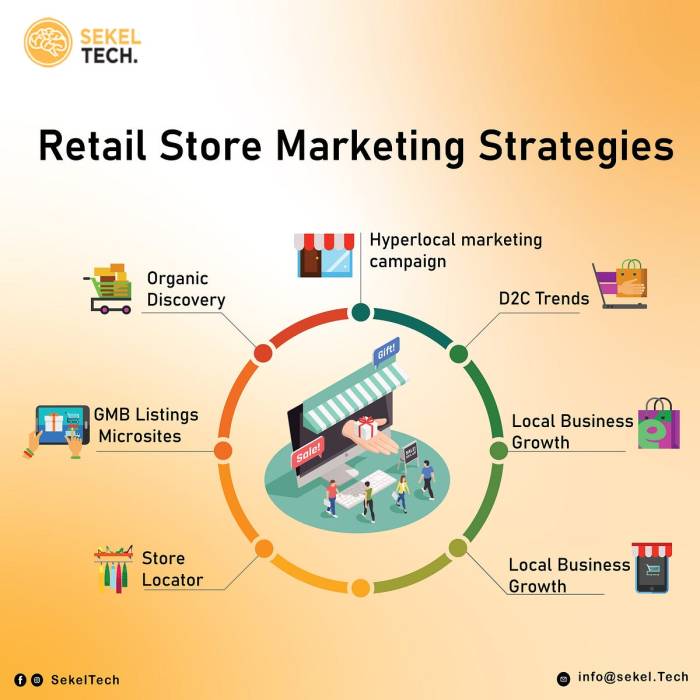
In conclusion, the impact of retail agencies on in-store sales cannot be underestimated. By implementing innovative strategies, leveraging technology, and forming strategic partnerships, these agencies play a pivotal role in shaping the success of retail businesses. As the retail industry continues to evolve, the role of retail agencies in driving in-store sales will only become more significant.
FAQ Explained
How do retail agencies contribute to enhancing in-store sales?
Retail agencies contribute to enhancing in-store sales by implementing strategic marketing campaigns, optimizing visual merchandising techniques, and leveraging technology to create engaging shopping experiences.
What role does consumer behavior play in influencing in-store sales strategies?
Consumer behavior data helps retail agencies understand customer preferences, shopping patterns, and decision-making processes, allowing them to tailor their sales strategies to meet the needs and expectations of customers effectively.
Can you provide examples of successful partnerships that have led to increased in-store sales?
Collaborations between retail agencies and other brands or businesses, such as co-branded promotions, exclusive product launches, and joint marketing campaigns, have proven to be successful in driving in-store sales and increasing customer engagement.
How do retail agencies track and analyze in-store sales data to optimize strategies?
Retail agencies utilize various methods such as POS systems, customer surveys, and sales analytics tools to collect and analyze in-store sales data. By identifying trends, patterns, and customer preferences, they can make data-driven decisions to optimize sales strategies and improve overall performance.



![12 Ventajas de usar Magento para Crear tu Tienda Online [Infografía]](https://market.radartasik.id/wp-content/uploads/2025/08/Magento-para-tienda-online-1-120x86.png)